
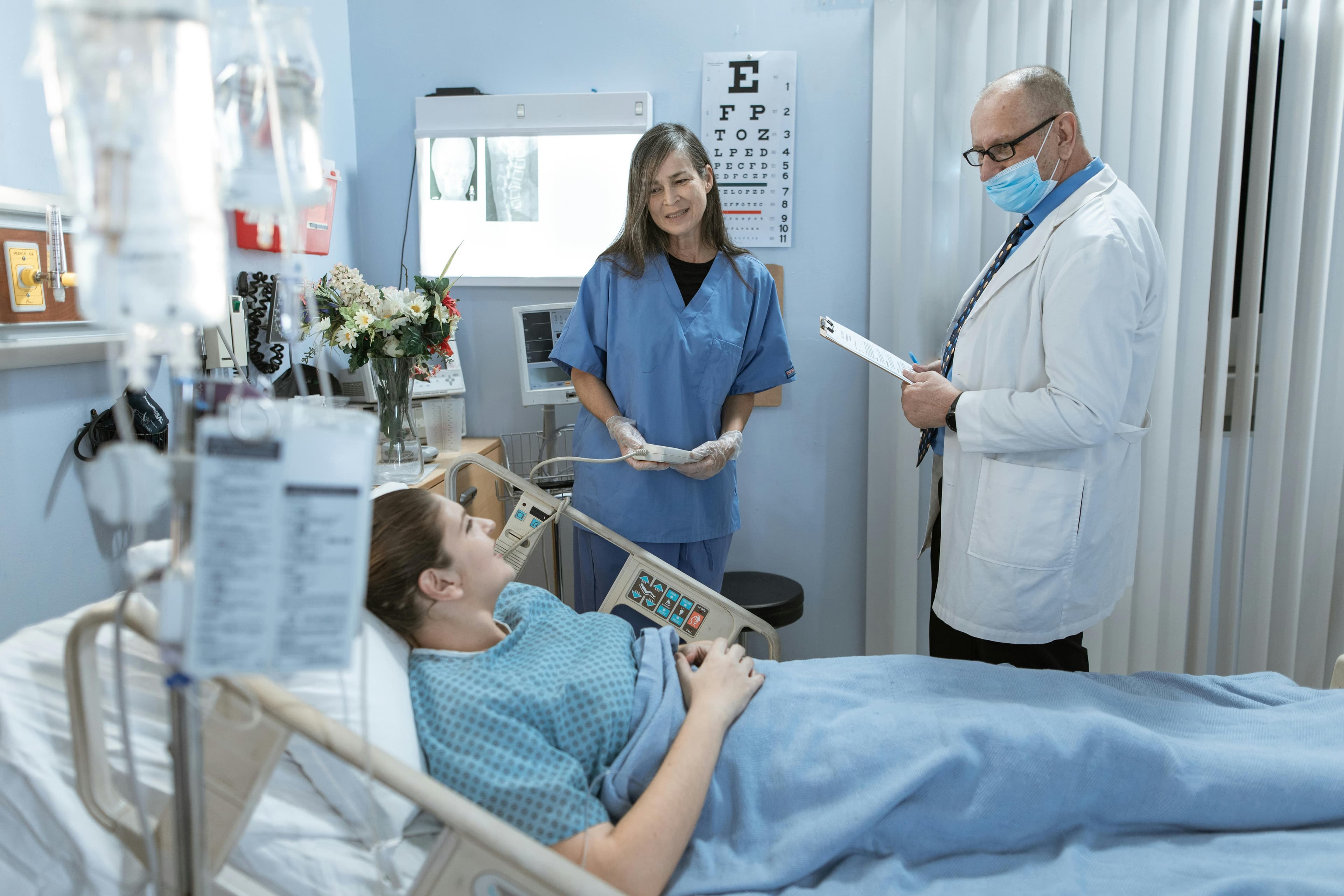
Doing medical residency in the USA was the most enriching experience of my life. I became more organized, more professional, and a better physician, dealing with an incredible variety of patients in an extremely organized and academic environment.
As someone who did medical residency in Brazil and in the USA, I can compare them well. Despite having done residency at a center of excellence in Brazil, the organization, academic rigor, research opportunities, and the level of the attendings (staff) is far superior in the USA.
Basic Routine of an Internal Medicine Residency in the USA
The basic routine of an internal medicine residency in the USA varies according to the rotation you are on. There are mandatory rotations, which are the majority, and elective rotations. The schedule follows a 6:2 scheme, that is, we have 6 weeks in the hospital (inpatient) for every 2 weeks outside the hospital (outpatient), a time to see our patients in the Primary Care Clinic, in an office routine from 9 a.m. to 5 p.m.
During the 6 inpatient weeks, you may be on the GMF (General Medical Floors), SDU (Stepdown Unit), CCU (Cardiac Care Unit), or MICU (Medical Intensive Care Unit), which are mandatory rotations. Alternatively, you may be in elective weeks, rotating with the fellows and attendings of the specialties answering consults in the hospital. The routine on the mandatory rotations is from 7 a.m. to 5 p.m. and, at my hospital, you never continue into the night, because as a rule no one works more than 12 hours straight. Nights are covered by residents scheduled on the Night Float, a sequence of 5 to 7 consecutive nights that we do a few times a year. This means that for the vast majority of the residency you work only during the day and always sleep at home.
Educational and Academic Components
In educational and academic terms, every morning we have the Morning Report, where residents bring cases to present and we have a very productive discussion about each case. Every day at noon we have the Noon Conference, a teaching session where different specialists from the hospital teach topics previously requested by the internal medicine department.
Challenges and Benefits
Residency is not an easy period; it is demanding and tiring, but it is a period of intense training, designed to prepare you in the best possible way. The first year is especially challenging, both because of the initial adaptation to the system, the routine, and the real day-to-day medical English, and because of the nature of the role of an intern (first-year resident), who needs to see many patients, present on rounds, and write many notes.
At the end of your training in the USA, you are a physician for the world, accepted in many countries without the need for additional validation and highly respected in the USA, with countless job options knocking on your door. It is a long climb from the decision to validate in the USA to the completion of residency, but it will be an uphill climb that will greatly elevate your standard and your value.
For those who wish to internationalize their medical career, RD Medicine offers complete support throughout the process, from teaching the USMLE Steps subjects and medical English to mentorship and clerkships in the USA. If you dream of reaching new heights in your career, count on us to turn that dream into reality.
Rafael Duarte
CEO of RD Medicine
Internal Medicine Physician at Jefferson Einstein - Philadelphia
Anesthesiologist at the National Cancer Institute - Brazil